
Staying Hydrated in Jacksonville
Beat the Florida heat with expert hydration tips from UF Health ER & Urgent Care to keep you and your family safe, energized and out of the ER this summer.


Written by: Corey Alexander
Published on: May 29, 2026
In Northeast Florida, staying hydrated is not just a good habit. It is a big part of protecting your health. Between long days working construction, afternoons spent walking at Jacksonville Beach or downtown along the St. Johns River, and time spent doing yardwork in the Florida sun, your body can lose fluids fast.
At UF Health Emergency & Urgent Care Centers, we see firsthand how the heat affects our community, especially during the warmer months. That’s why we’re sharing a few expert hydration tips to help our neighbors stay healthy, energized and safe.
Why Water Intake Matters
Water plays a role in nearly every system in your body. It makes up about half to two-thirds of your body weight and helps regulate temperature, support brain function and focus, maintain energy levels, protect kidney health and flush out waste.
When it’s hot outside, your body loses water through sweating and using the bathroom. When you do not drink enough to replace that water, dehydration can set in quickly.
And in Jacksonville’s heat, those symptoms can sneak up faster than expected, especially if you’re at the beach, on the golf course, at youth sporting events or enjoying local festivals.
How much water do you need?
The amount of water you need each day depends on your age, activity level, overall health and how much time you spend outdoors.
According to guidelines from the National Academies of Sciences, Engineering, and Medicine, the general recommendation is about:
- 15.5 cups of fluids per day for men
- 11.5 cups of fluids per day for women
These totals include water, other beverages and even the fluids you get from food. Although many fruits and vegetables contribute to hydration, most of your daily intake should still come from what you drink.
Note: If you work outdoors, plan on spending most of your day outside in the sun or exercising in the hot and humid weather, you need even more water!
Symptoms of Dehydration
Even mild dehydration can leave you feeling tired, dizzy, foggy or irritable. One of the easiest ways to check your hydration is by looking at your urine color — pale yellow typically means you’re well hydrated, while darker yellow may be a sign that you need more fluids.
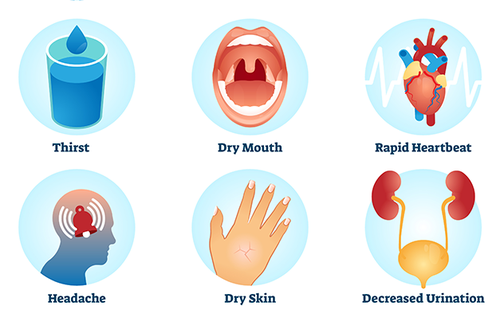
Other common symptoms include:
If you experience a fast heartbeat, confusion, vomiting or are unable to keep fluids down, you should seek medical attention right away.
Infants, young children, older adults and people with chronic medical conditions are at higher risk for dehydration.
Tips to stay hydrated around Jacksonville
Whether you are putting in a hard day of landscaping or construction, spending the day fishing on the Intracoastal, running along trails at one of Jacksonville’s many public parks, or enjoying a Saturday shopping at the St. Johns Town Center, these simple habits can help:
If you are sweating heavily for long periods of time, drinks with electrolytes may help in some cases, especially during intense activity or illness.
When to Seek Care at UF Health Emergency & Urgent Care Centers
As the Florida heat builds, make hydration a daily priority for you and your family. And if symptoms become severe or do not improve, turn to UF Health Emergency & Urgent Care Centers for high-quality care close to home. Our emergency medicine-trained team is ready 24/7 to make you feel better so you can get back to enjoying the outdoors this summer.